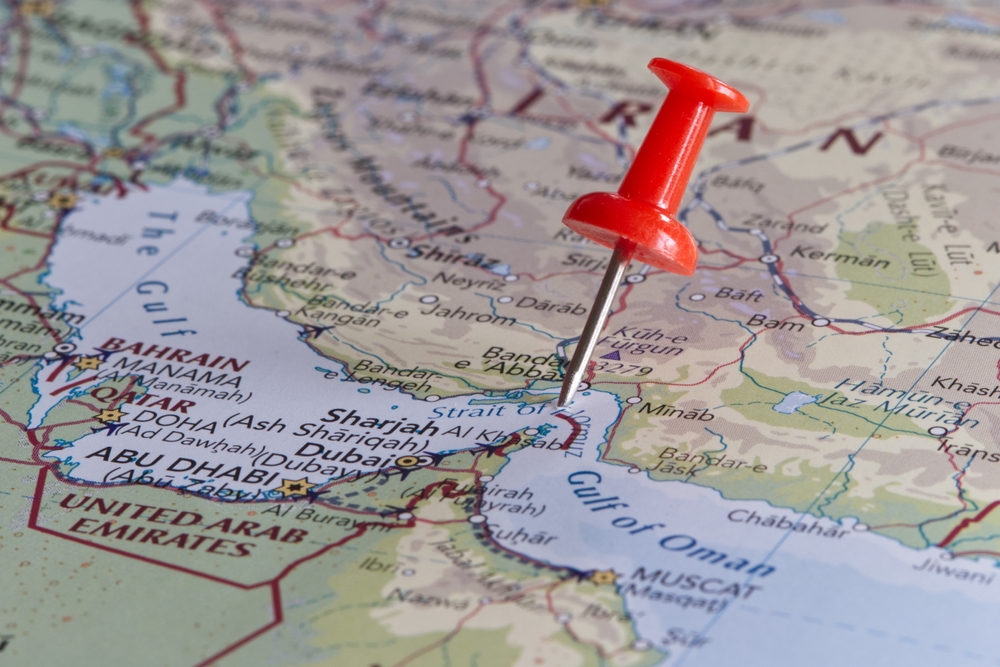
Why the Strait of Hormuz Has No Real Alternative for Global Oil Trade
Hormuz Bypass Routes Show The Gulf’s Limits The ongoing conflict involving Iran has highlighted a critical weakness in the global energy market: there is still no true alternative to the Strait of Hormuz. While several Middle Eastern countries have invested in pipelines that bypass the strategic waterway, none can handle the massive volume of oil and natural gas that normally passes through the strait.
As shipping disruptions continue, global energy markets have become increasingly sensitive to developments in the Gulf. Although Saudi Arabia, the United Arab Emirates (UAE), Iraq, and Iran have developed limited export alternatives, these routes remain constrained by capacity, security concerns, geography, and infrastructure limitations.
The current crisis has once again demonstrated that the Strait of Hormuz remains the world’s most important energy chokepoint.
Why the Strait of Hormuz Is So Important
Roughly one-fifth of the world’s oil supply passes through the Strait of Hormuz every day, making it the single most important maritime route for global energy trade.
Any disruption immediately affects crude oil prices, shipping costs, insurance premiums, and overall market confidence. Even temporary interruptions create uncertainty that impacts economies around the world.
Saudi Arabia Has the Strongest Alternative
Saudi Arabia operates the region’s largest bypass through its East-West Pipeline, connecting oil fields in the Eastern Province with the Red Sea port of Yanbu.
This pipeline allows Saudi Arabia to export significant quantities of crude without relying entirely on Hormuz.
However, the route has several limitations:
- Export capacity remains lower than total production.
- Tanker availability limits shipments.
- Port logistics create bottlenecks.
- Ships must still pass through the Red Sea and the Bab el-Mandeb Strait, another strategically sensitive waterway.
Although this is the strongest existing alternative, it cannot fully replace Hormuz during a prolonged disruption.
UAE’s Fujairah Pipeline Offers Limited Relief
The United Arab Emirates has reduced some dependence on Hormuz through the Habshan-Fujairah Pipeline, which transports crude oil from Abu Dhabi to Fujairah on the Gulf of Oman.
Because Fujairah lies outside Hormuz, the UAE can continue exporting part of its oil even during regional tensions.
Nevertheless, the pipeline has limited capacity compared with total Gulf exports. Export terminals and surrounding infrastructure also remain vulnerable to potential attacks or operational disruptions.
As a result, Fujairah serves as an important backup—but not a complete solution.
Iraq’s Northern Export Route Plays a Supporting Role
Iraq exports some oil through the Kirkuk-Ceyhan Pipeline, linking northern oil fields to Turkey’s Mediterranean coast.
Although this route avoids Hormuz, it has experienced repeated shutdowns due to political disputes, security issues, and maintenance problems.
Even after operations resumed, export volumes remain well below what would be required to compensate for major disruptions in the Gulf.
Most of Iraq’s oil production still depends heavily on southern export terminals connected to the Persian Gulf.
Iran’s Jask Pipeline Is Still Developing
Iran has attempted to reduce reliance on Hormuz through the Goreh-Jask Pipeline, which transports crude to the Jask terminal on the Gulf of Oman.
The project reflects Tehran’s long-term strategy to diversify export routes.
However, the infrastructure is still developing and cannot yet handle enough exports to significantly reduce Iran’s dependence on the Strait of Hormuz.
For now, Jask represents an emerging strategic asset rather than a complete alternative.
Proposed Projects Remain Unfinished
Several additional bypass projects have been proposed over the years, including:
- Basra-to-Oman pipeline
- Basra-to-Aqaba pipeline through Jordan
- New canal connections to the Gulf of Oman
- Expanded regional pipeline networks
Despite their strategic importance, most remain stalled because of:
- High construction costs
- Regional political disagreements
- Security concerns
- Engineering challenges
- Financing difficulties
These delays highlight how difficult it is to replace such a critical global shipping route.
The Biggest Challenge Is Capacity
The primary weakness of every Strait of Hormuz alternative is capacity.
Even if all existing pipelines operated at maximum output, they still could not transport the same volume of oil and gas that normally flows through Hormuz each day.
This explains why financial markets react sharply whenever shipping through the strait is threatened.
Alternative routes can reduce some pressure, but they cannot prevent major supply disruptions if Hormuz remains blocked for an extended period.
Conclusion
The latest regional crisis has reinforced a reality that energy markets have understood for decades: there is no full replacement for the Strait of Hormuz.
Saudi Arabia, the UAE, Iraq, and Iran each possess limited alternative export routes, but none offers enough capacity to replace the world’s busiest oil corridor.
Until large-scale infrastructure projects become operational, the global economy will continue to depend heavily on Hormuz. Whenever shipping through the strait faces disruption, oil markets, energy prices, and the wider global economy are likely to feel the impact.
Hi, this is a comment.
To get started with moderating, editing, and deleting comments, please visit the Comments screen in the dashboard.
Commenter avatars come from Gravatar.